
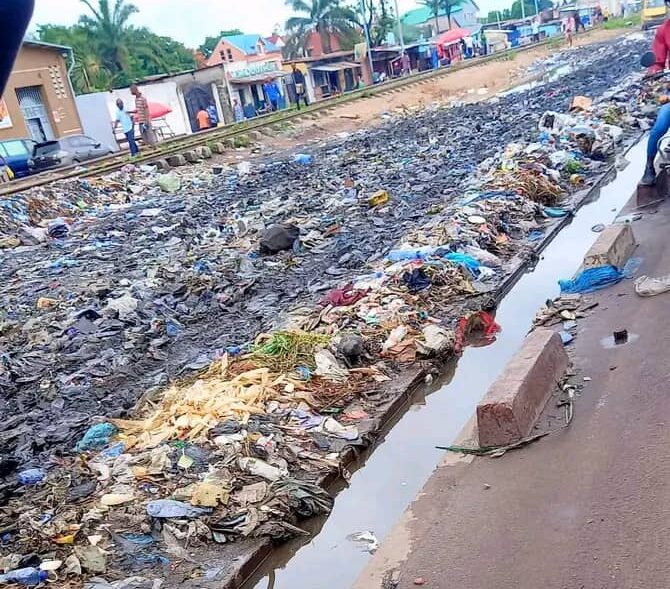
Eden Stream Foundation (EdSF Burundi) has recently, in August 4, 2025, realized some challenges related to household waste management in Burundi, during its organized national cleaning day with stakeholders in the sector. EdSF Burundi identified obstacles including rapid urban growth, financial constraints, and lack of public awareness to sort out waste by category, inadequate landfill and infrastructure, and cultural attitudes. Most districts around the country, are not immune to the problems posed by the ever-increasing in chemicals and waste generation and the consequences this has on waste collection and disposal. Waste therefore threatens quality of life, human health, natural resources and the environment.
In some parts of the city of Bujumbura and in countryside, chemicals and waste originate in households, industries, commercial and social and clinic establishments. As there are many producers, a sustained effort must be made to raise awareness and educate the population in the management of their chemicals and waste. Success in the sustainable management of chemicals and household waste requires first of all good management of the people who produce them. This will inevitably continue to involve awareness-raising and environmental education actions. These actions aim in particular to promote a positive change in the image that man has of waste.
Nationally, the poor management of household waste and chemicals is associated to the economic, institutional, political, informational and trans-shareholder context. The population explosion, the increase in urban activities, the lack of financial resources and the absence of real environmental policies hinder the sustainable management of waste and chemicals. But also the stakeholders met on the ground during this clearing day, mentioned a series of difficulties that the city of Bujumbura (Burundi) faces in waste and chemicals management, including the lack of an appropriate landfill and treatment that need an effective waste and chemicals management relying on sorting materials at the source into distinct categories—recyclables, organics, hazardous, and general waste—to facilitate proper recycling, composting, or safe disposal. In addition, there is a lack of awareness on the part of the authorities, the lack of transportation means, overpopulation, lack of will of the population, lack of daily monitoring, low household incomes, absence of law, inability to recycle certain waste, lack of bins for the storage of waste at the places of production.
Thus, the EdSF Burundi’s experts showed that the world of waste is a subject that is less explored in the social sciences and humanities, especially in Burundi. That is to say, EdSF Burundi often put in place techniques for the management and recovery of waste making it possible to obtain the different substitutes. In this regard, EdSF Burundi, with generous support from the donors, wishes to continue dealing with chemicals and waste sector emphasizing on the following:
- Source Segregation (households, industries, and commercial and social establishments): Separating waste immediately into distinct containers:
- Recyclables: Paper, cardboard, plastic, glass, and metals.
- Organics (Biodegradable): Food scraps and garden waste for composting.
- Hazardous/Chemical Waste: Batteries, electronics, paint, and chemicals, which must never be mixed with general waste.
- General/Residual Waste: Non-recyclable, non-hazardous items for landfill.
- Automated/Mechanical Sorting: Advanced technologies in Material Recovery Facilities (MRFs), such as magnets for metals, eddy currents for non-ferrous metals, and optical sorters for plastics.
- Chemical and Hazardous Waste Management
- Containment: Using require specialized, secure, and clearly labeled containers for hazardous materials.
- Segregation: Separating them by compatibility (e.g., separating acids from bases) to avoid dangerous reactions.
- Disposal: Coordinating with licensed waste collection companies for specialized neutralization avoiding incineration, or specialized landfilling.
- Best Practices
- Color-Coded Systems: Using standardized, labeled bins (e.g., blue for recycling, green for organics) improves accuracy.
- Training & Education: Ensuring staff or residents understand the sorting, disposal and recycling guidelines.
- Cleaning: Rinsing food containers prevents contamination of recyclable materials.
- Documentation: Keeping records of chemical waste types and quantities for compliance.